
About Us

Our Story

NAFSAN is a Namibian membership-based, non-profit alliance consisting of civil society, academia, private sector and committed individuals, and it is part of a global movement to eradicate malnutrition in all its forms and to achieve food security in a sustainable manner.

In this regard, NAFSAN is a co-opted member and representative of Civil Society, Academia and Private Sector within  Namibia’s Food and Nutrition Security Coordination Structure under the auspices of the Office of the Prime Minister.

NAFSAN is also part of the Civil Society Network (particularly the East & Southern Africa Nutrition Civil Society Networks) of the global Scaling up Nutrition (SUN) movement of which Namibia is a member since 2011.

As Namibia’s national alliance for nutrition and food security, NAFSAN’s primary roles are to share information, enhance networking and collaboration among member and stakeholders, support coordinated actions and reporting mechanisms, and strengthen advocacy efforts.

Vision, Mission & Aims

Vision, mission and aims are three inter-connected aspects of the purpose and intentions of an organization. 

  • The vision is an image of the future as an organization sees and desires it. It is a shared dream of all members, giving a sense of shared values, identity and purpose.
  • The mission is the assignment the organization gives itself to realize its vision, and serves as a source of motivation and guidance.
    While the vision describes how the envisioned future looks like, the mission statements are outlining the pathways on which the organisation will get there. 
  • Aims are then the various vehicles (i.e. specific services offered and activities conducted) in which the organisation moves along these outlined pathways towards its vision. In other words, the aims specifically describe how the organisation achieves its mission.

Our Vision

All persons in Namibia have the resources, knowledge and motivation to ensure food security and optimal nutritional status for themselves, and all children in Namibia are sufficiently well-nourished.

Our Mission

NAFSAN is part of Namibia’s movement to eradicate malnutrition and to achieve food security. NAFSAN will:

  1. Provide organisations, communities, and individuals with effective platforms, tools, information and skills to achieve food security and optimal nutritional status for themselves and others;
  2. Promote nutrition and food science and make such science applicable and accessible to the entire population of Namibia;  and
  3. Advocate and practically support efficient governmental and non-governmental communication and collaboration structures, financial and political commitment, legislation, policies, programmes and actions that ensure food security, and an effective, sustainable and equity-focused approach to improving the nutritional status of everyone in Namibia.

The AIMS of NAFSAN are to: 

  • Work in partnership with government, private sector, civil society, communities, academia, educators, committed individuals, UN agencies and other international partners towards achieving NAFSAN’s vision and mission;
  • Enhance national and sub-national structures and systems for effective, accountable, coordinated and sustainable implementation of nutrition and food security actions by organisations, communities and individuals;
  • Raise public awareness of structures, laws, policies, programmes and initiatives that promote sustainable food security and optimal nutrition, and to critically and constructively review them and to advocate for necessary changes;
  • Promote learning and innovation concerning nutrition and food security by collecting credible evidence, conducting policy analyses, and providing platforms for communication among the public, partners and relevant professionals;  and
  • Support civil society and other stakeholders to effectively discuss and take coordinated action aimed at improving nutrition and food security.

Background

Nutrition and Food Security has been a serious concern for Namibia since its Independence in 1990.

In 1995 Namibia’s first Food and Nutrition Policy was developed by the initial Food Security and Nutrition Council. In the following years, a number of other relevant policies have been developed (including the approval of the Food and Nutrition Guidelines for Namibia by Cabinet in 2000), yet over time the Council itself became less and less active.


In 2009, under leadership of then Prime Minister Nahas Angula, the Namibian Government in collaboration with a broad variety of national and international stakeholders, decided to establish the Namibian Alliance for Improved Nutrition (NAFIN) as a national multi-sectoral multi-stakeholder coordination body to tackle the country’s huge double burden of malnutrition. For several years, NAFIN – with continuous support from UNICEF – highlighted the need for action around Namibia’s Malnutrition Crisis).

In 2011Namibia joined the Scaling Up Nutrition (SUN) Movement, a global alliance of currently 65 countries committed to end malnutrition in all its forms.

However, as from 2016the Namibian Alliance for Improved Nutrition (NAFIN) as Namibia’s coordination mechanisms for nutrition and food security became increasingly dormant.


As a countermeasure, the 
Namibian Government then decided in 2017 to re-establish the Food and Nutrition Security Council (FNSC) under the Office of the Prime Minister and revise the Food and Nutrition Security Policy together with an accompanying Implementation Action Plan and comprehensive Coordination Structures.

In December 2021 all three components were finalised and launched, and implementation is already on its way.

With the re-establishment of the Food and Nutrition Security Council and its respective coordination systems, another body was now needed to ensure that Civil Society, Academia and the Private Sector are well represented within these new structures, to ensure effective information sharing, coordination and collaboration among all stakeholders.

Hence, back in early 2017Synergos Trust Namibia (which served as NAFIN’s Secretariat in a voluntary capacity since its inception) applied to the SUN Pool Fund for funding and successfully implemented the NamSUN-CSA project (October 2018 until January 2020).

This project aimed at raising awareness about nutrition- and food security related matters and at establishing a Civil Society Alliance in Namibia that will then fulfill critical functions around networking, information sharing, advocacy and improving coordination of activities. During this project, a stakeholder mapping was conducted in 2019.


This is how
 the Nutrition and Food Security Alliance of Namibia (NAFSAN) was established during its Constituting Meeting on 18 October 2019 as a national platform that brings together actors from civil society, academia, private sector and committed individuals.

Over the next couple of months, the elected founding Board members then worked on NAFSAN’s Constitution (finalized in March 2020 and revised in January 2022), and NAFSAN then also became an official member of the SUN Civil Society Network, particularly the East & Southern Africa Nutrition Civil Society Networks.


As of this year
, NAFSAN is focusing on properly setting up internal coordination mechanisms to efficiently support its members, while also actively supporting Namibia’s SUN Country Network, i.e. the newly revised Food and Nutrition Security Coordination Structures.

Management & Board

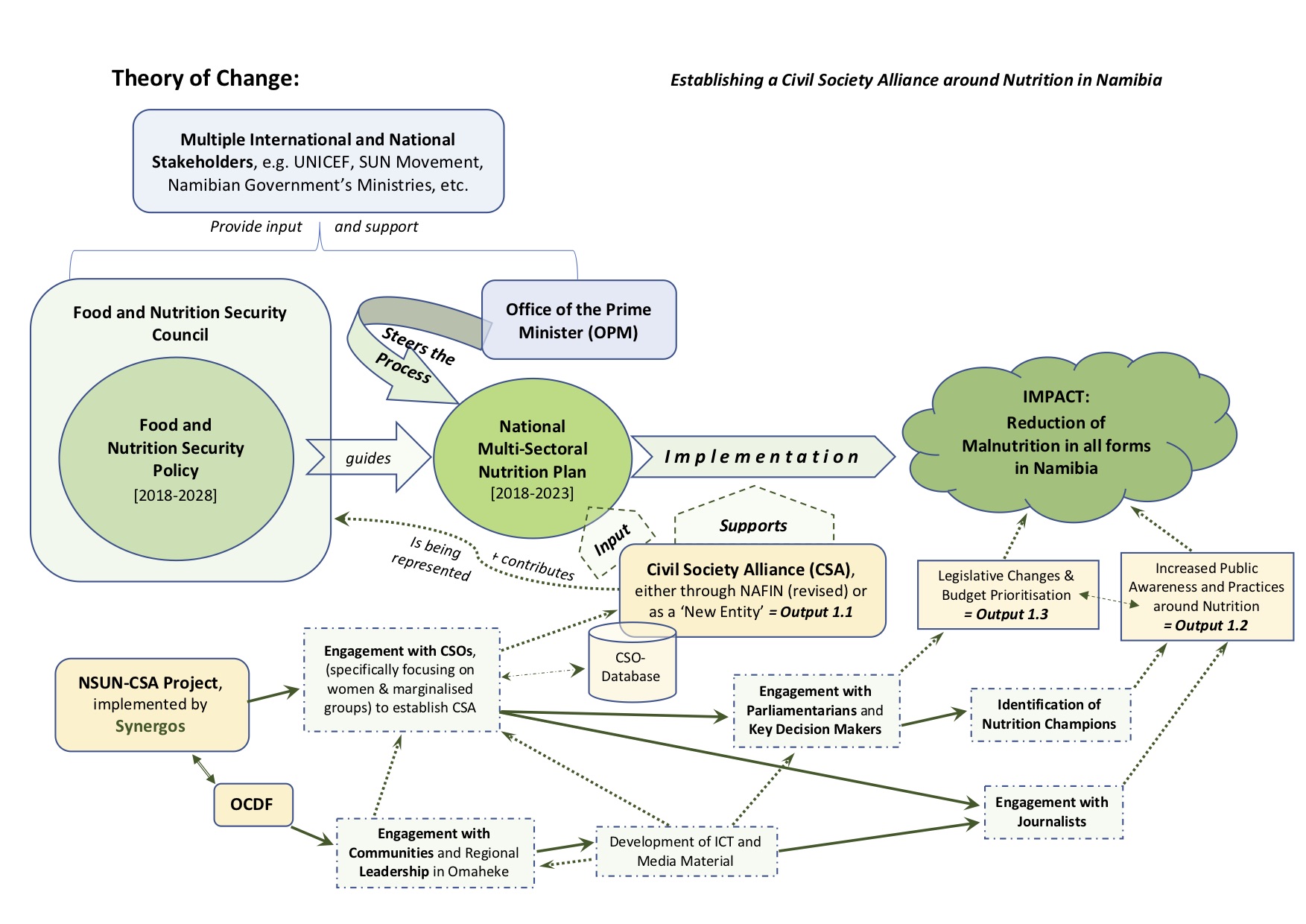
NAFSAN operates as a dynamic, inclusive, agile and lean membership-based organisation. This graphic here illustrates its operations and interaction with the Food and Nutrition Security Council, as Namibia’s platform for multi-sectoral multi-stakeholder coordination. 

Click the image to see how NAFSAN functions as a member-based organization.

The Nutrition and Food Security Alliance of Namibia (NAFSAN) is operating through its Secretariat, with Mr. Ben Schernick as Director, Ms. Fredrika Amupolo and Carmen Letlhagoje as Nutritionists, and Ms. Pennina Ndengu as Financial Manager.

Ms. Maria Kandjungu provides ongoing part-time support as Communication Specialist, while several young professionals contribute in their capacity as interns.

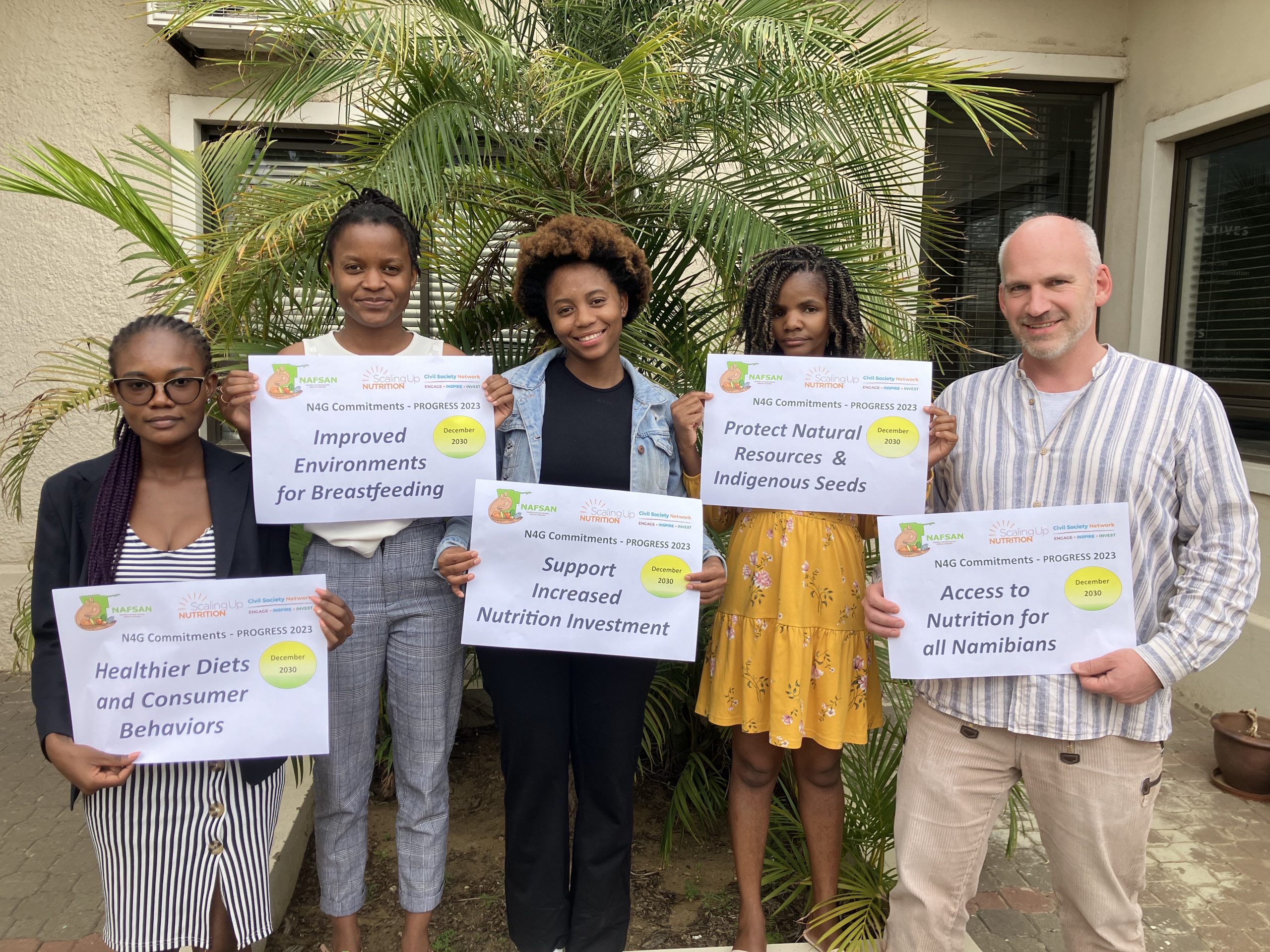
NAFSAN Team

December 2023
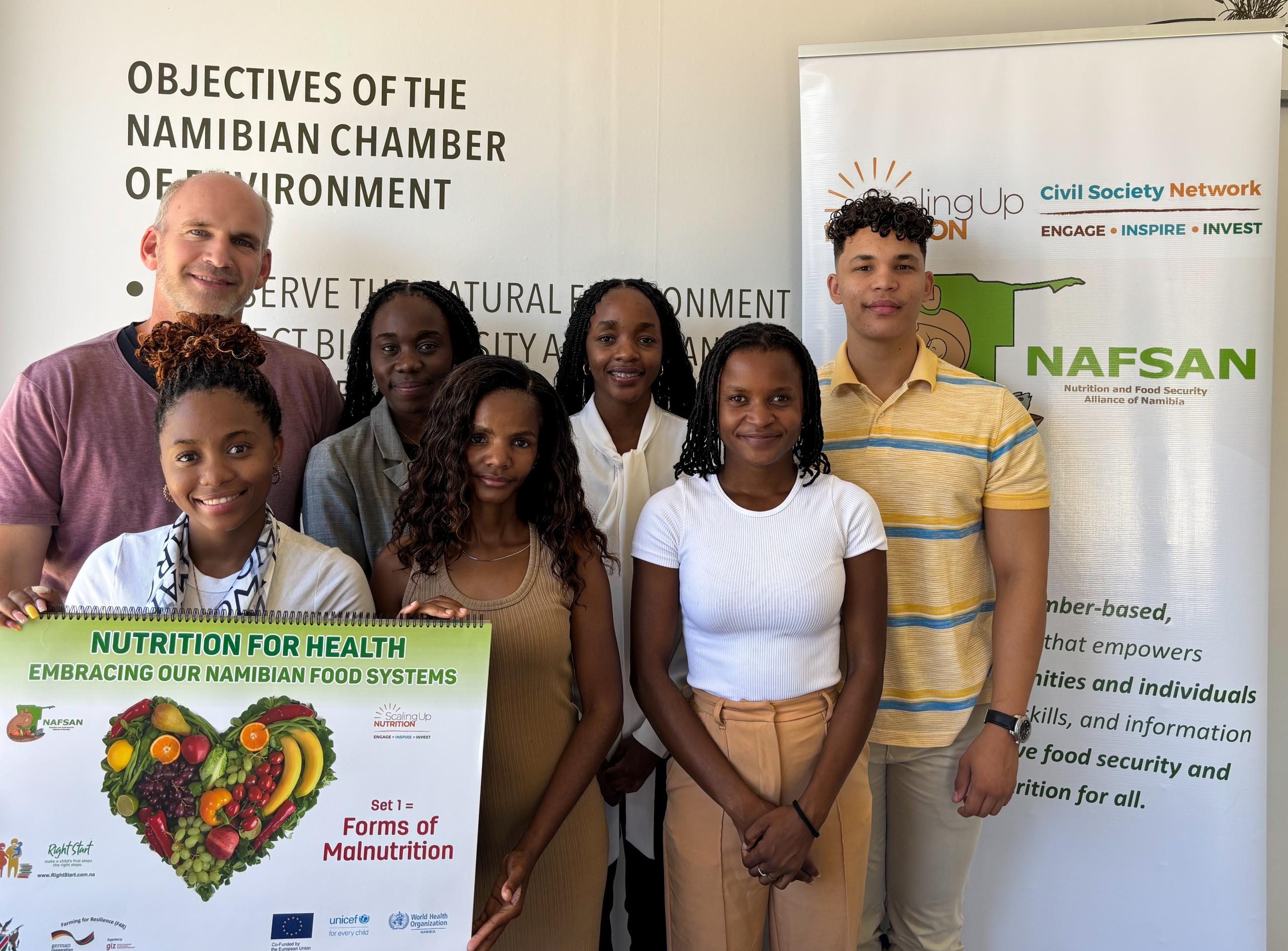
NAFSAN Team

January 2025

The role of the NAFSAN Board is to ensure good governance and to oversee effective coordination and efficient administration of NAFSAN and its activities. Board members are elected by all NAFSAN members during Annual General Meetings as per NAFSAN’s Constitution.

The Board is responsible to ensure overall accountability of the organisation towards its members, partners and all other internal and external stakeholders. The Board also sets NAFSAN’s strategic priorities, guided by NAFSAN’s members, for instance during Annual General Meetings.

Board members provide their services in a pro-bono capacity and exercise their powers strictly in accordance with provisions of NAFSAN’s Constitution, the laws of Namibia and the highest ethical standards, as well as in line with the SUN Movement Principles of Engagement.

Mrs. M. Charlotte Keyter (Individual Member)

Acting Chairperson

Mrs. Charlotte Keyter is a Nutritionist by profession was a Senior Lecturer at the University of Namibia’s before she became the Head of Department of Physical and Sport Sciences at the School of Allied Health Sciences within the Faculty of Health Sciences & Veterinary Medicine. She is passionate about improving the nutritional status of Namibians for several decades in very practical terms, as highlighted in her talk on “Nutrition in Namibia: Concepts and Controversies", and she also serves as Board Member and Chair Person of the Technical Committee at the Namibian College of Open Learning (NAMCOL).

Mrs. Dalinka Alberto (NamDairies)

Former Chairperson

Mrs. Dalinka Alberto is the Marketing Manager at Namibia Dairies in Windhoek, Namibia, Namibia’s largest dairy production and processing company and part of the O&L Group of Companies. Her expertise is multi-tiered and cross-functional project leadership, process conception and optimization, and portfolio strategy, as well as crafting agile and innovative Fast-Moving Consumer Goods (FMCG) brand portfolios. During her time at Namibia Dairies, Dalinka has created an entire Gate-Stage Process with which projects are effectively and efficiently taken from conception to implementation. She was the project lead on two complete product portfolio restructurings that saw the portfolios analyzed, re-costed, and streamlined to ensure optimized positioning and competitiveness, has led more than eight product renovation, four production capitalization, and no fewer than ten product innovation projects. Her current focus is on a fully-scoped project of qualitative research stage, commercial assessment, agency pitch process, and campaign development for a white milk portfolio, with a like project underway for a portfolio of cultured products. Dalinka’s other professional focus is engaged, mindful, and purposeful leadership that takes teams and organizations to the next level. When not leading marketing projects or honing her leadership skill set, Dalinka is engaging in her translating, proofreading, and editing profession. Dalinka is a member of the Waldorf School Windhoek School Board (since 2021) and founding Board member (since 2019) and Chairperson of NAFSAN. When not engaged in either, Dalinka can be found engrossed in a smashingly good mystery, indulging in a glass of hearty red, working up sweat to keep her sane and focused, or spending time with and learning from her kids, whom she considers her greatest achievement and her greatest challenge.
BACK TO TOP
Scroll to Top